

 UPLOAD FILES
Trade Show Event Planning That Saves Time, Controls Costs & Reduces Stress

Trade show event planning works best when you plan in this order: goals, timeline, budget, booth, logistics, team, event day, and follow-up. Each step decides the next one. Your goal decides your booth. Your booth decides your shipping. Your shipping decides your deadlines.
Plan this way and you avoid rush printing, surprise shipping fees, and event-day confusion.
This guide gives you a simple trade show plan you can follow for any show:
-
A week-by-week trade show timeline
-
A full trade show budget list
-
Easy ways to cut costs
-
How to plan your booth, staff, and lead capture
-
A complete trade show planning checklist
Trade Show Event Planning
Trade show event planning means getting everything ready for a trade show, from your first goal to your last follow-up call. It connects your trade show goals, budget, trade show display, graphics, trade show shipping, staff, lead capture, booth setup, booth takedown, and follow-up into one plan.
Plan these parts together. If you plan each one alone, one late task can delay everything else.
Start With Your Trade Show Goals
Your goal comes first because it shapes every other decision.
|
Goal |
What It Changes |
|
Brand awareness |
Big graphics, short message |
|
Lead generation |
Open space, easy lead capture |
|
Product launch |
Product displays, demo area |
|
Sales talks |
Counter or seating, sales staff |
|
Customer meetings |
Meeting space, set appointments |
|
Market research |
Time to visit other booths |
Pick one main goal. Too many goals make the message unclear.
Start Trade Show Planning In Advance
Start trade show planning 8 to 12 weeks before the show, or earlier. This gives you time to order graphics, book shipping, and meet venue deadlines without rush fees. Every event has its own deadlines, so check them first.
8-12+ weeks before: Confirm the event and booth size. Set goals and budget. Read the exhibitor manual. Choose your display, message, and materials.
4-8 weeks before: Order graphics and displays. Book shipping. Make marketing materials. Give staff their jobs. Plan lead capture and technology.
1-3 weeks before: Count everything. Test technology. Recheck shipping. Review the layout. Brief staff. Make a setup checklist.
Event week: Confirm deliveries. Check booth parts. Set up and test. Do a final walkthrough.
After the event: Take down and count equipment. Ship or store displays. Follow up with leads. Review results.
Create a Trade Show Budget
Budget for the whole event, not just the booth. The surprises usually come from shipping, venue fees, and travel.
Include these in your trade show budget:
-
Booth: space, display, graphics, furniture
-
Logistics: shipping, material handling, storage, setup and takedown
-
Venue services: power, internet, cleaning
-
Marketing: printed materials, giveaways, lead-capture tools
-
People: travel, hotel, meals
People often forget material handling and power fees. Check the exhibitor manual for them.
Reduce Trade Show Costs Methods
The best way to save money is to plan early and buy things you can use again.
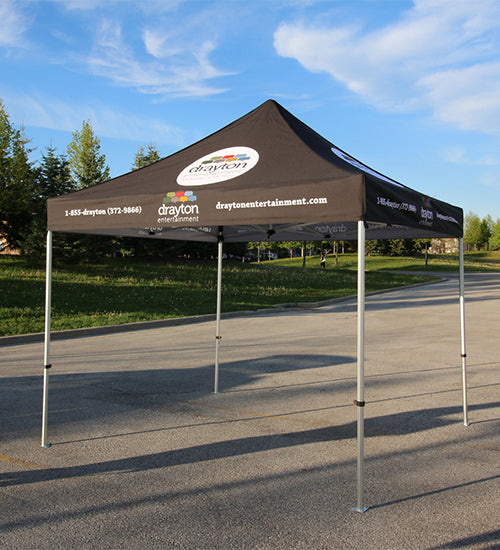
Use displays more than once. A custom canopy tent with your logo works at indoor and outdoor events for years.
Order graphics early. Rush printing costs more.
Ship together. Send items in one shipment when you can.
Take only what you need. Don't print or ship things "just in case."
Keep a ready event kit. Pack cables, chargers, extension cords, tools, and signs in one place. Strong shipping cases keep your kit safe and easy to find.
Plan a Trade Show Booth
Choose your trade show booth based on your goal and your space, not on what looks biggest.
Before you pick a display, check your booth size, open sides, visitor flow, products, storage, setup time, and whether you can reuse it.
-
Getting leads: open space, room to talk, easy lead capture
-
Showing products: product displays, demo area
-
Building your brand: big visuals, strong logo, short message
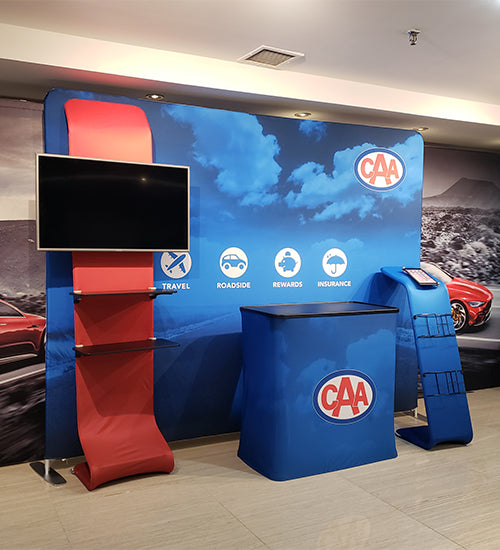
For indoor shows, 10ft trade show displays fit a standard booth, and tension fabric displays are light and easy to pack. For outdoor shows, a 10x10 custom canopy or 10x20 custom canopy gives you shade and branding together. Add walls from our canopy tent accessories for a backdrop or privacy.
Plan Your Booth Layout Before the Event
A simple booth map shows you problems before you arrive. Mark the entrance, back wall, displays, tables, storage, and staff area. Then plan how visitors move: Notice → Enter → Explore → Interact → Act.
Ask yourself: Can people see the booth from the aisle? Do visitors know what to do next?
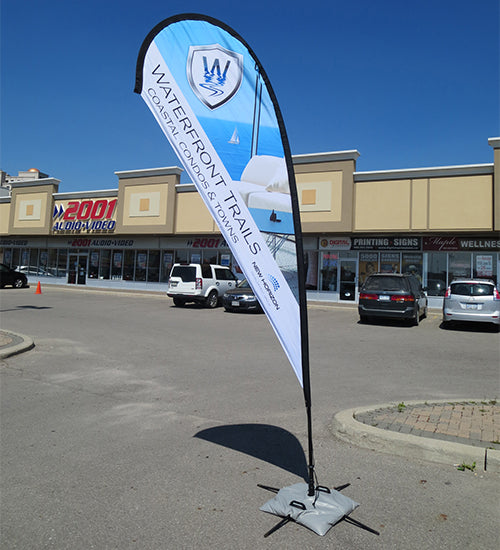
Custom table covers hide boxes under the table and show your brand. Custom feather flags help people find you at outdoor events.
Plan Trade Show Logistics Before You Ship Anything
Read the exhibitor manual early. It holds the deadlines and fees that affect your whole plan. Missing a convention center delivery deadline can mean extra costs or a late booth.
Check your delivery address and deadline, move-in and move-out times, material handling rules, storage, power needs, and venue rules.
Things to Bring to a Trade Show
A packing list stops you from forgetting the small things that cause big problems.
-
Booth: display, graphics, tables, chairs, signs, lights
-
Technology: laptop, tablet, chargers, power strips, cables, adapters
-
Marketing: brochures, business cards, giveaways, QR codes
-
Supplies: tools, tape, cleaning supplies, cable ties, backup items
Label every case and photograph it once packed.
Smart Trade Show Staffing
A booth runs smoothly when every person knows their job before the show. Assign setup, products, technology, greeting visitors, lead capture, break cover, and cleanup. For big teams, make shifts so the booth is never empty.
Set simple rules: don't sit together in a group, put phones away with visitors, keep the booth clean, and greet people.
Plan Booth Messaging and Lead Capture
Visitors decide in seconds whether to stop. Your message should tell them who you are, what you sell, who it is for, and what to do next. Use one clear action, like "See a demo" or "Get a quote."
Plan lead capture before the show so no good lead gets lost. Decide what details to collect, who collects them, where they are saved, and who follows up.
A simple system you can adjust:
-
Hot: follow up right away
-
Warm: follow up after the show
-
Nurture: add to your marketing list
Event-Day Trade Show Checklist
Before doors open: check the booth, test technology, restock, and confirm staff jobs.
During the show: keep the booth tidy, collect leads the same way each time, and note common questions.
End of each day: lock up equipment, sort leads, charge devices, and restock.
Plan Booth Takedown and Reuse
Before the event, decide what gets packed first, how graphics are protected, which case each part goes in, and where everything is stored. A booth that comes home complete becomes part of your long-term trade show strategy, not a one-time cost.
Common Trade Show Planning Mistakes
-
Starting too late
-
No full budget
-
Missing venue deadlines
-
Picking a booth before setting goals
-
Last-minute graphics
-
Forgetting shipping and handling costs
-
No staff schedule or lead capture plan
-
No takedown or follow-up plan
Complete Trade Show Planning Checklist
-
Strategy: ☐ Set goals ☐ Know your audience ☐ Write your message
-
Budget: ☐ Booth ☐ Display ☐ Shipping ☐ Travel ☐ Marketing
-
Booth: ☐ Confirm size ☐ Plan layout ☐ Pick display ☐ Plan storage
-
Logistics: ☐ Read exhibitor manual ☐ Note deadlines ☐ Book shipping
-
Team: ☐ Give jobs ☐ Make shifts ☐ Train staff
-
Event: ☐ Check booth ☐ Test technology ☐ Collect leads
-
After: ☐ Count equipment ☐ Follow up ☐ Review results
Plan the Event First, Then Pick the Equipment
Before you buy anything, look at your full plan: event size, booth size, branding, setup time, weather, staff, transport, reuse, and budget. Then choose the equipment that fits.
Express Canopy has custom canopies, trade show displays, table covers, flags, and accessories for indoor and outdoor events. Contact our team with your booth size and event date, and we will help you find the right setup.
FAQs
What should be included in a trade show plan?
A trade show plan should include goals, a timeline, a budget, your booth, shipping, staff jobs, your message, lead capture, and follow-up, all on one schedule.
What should you do after a trade show?
Pack up and count your equipment. Sort your leads and follow up fast. Then review what worked for next time.