 UPLOAD FILES
Heavy-Duty Canopy Tent With Your Logo and Custom Design: What Makes One Worth Buying?
Anyone who has run a booth through a windy afternoon knows the moment. The frame flexes. The fabric snaps. Suddenly a "professional setup" looks like a yard sale gone wrong. That single moment is why so many vendors and event teams search for a heavy-duty canopy tent.
They want something sturdier than a weekend tent from a big-box store. Once you know what actually makes a tent heavy-duty, the buying decision gets much easier. Branding is usually the whole point of buying one in the first place. So frame quality and print quality should be judged together, not separately.
Start With the Frame
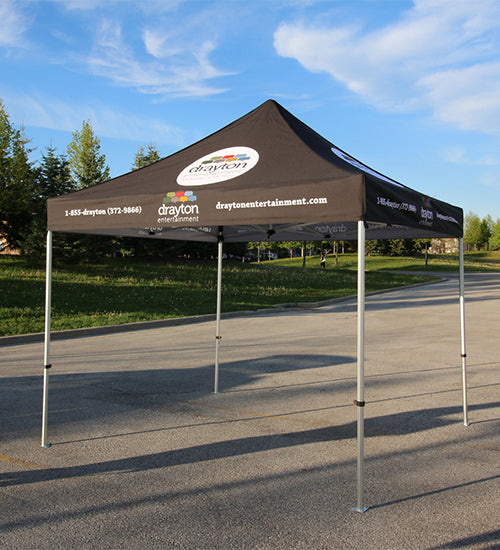
The frame is the skeleton of the tent. It is also the first part that fails under pressure. Look for hexagonal aluminum frames in 40mm or 50mm thickness. These are the two most common commercial grades. A 50mm frame adds extra stability for windy locations. A 40mm frame still works well for lighter, more frequent setups. Express Canopy's 10x10 Custom Canopy Tent Builder lets you pick the frame thickness that fits your setup. That way the tent matches how you actually use it, not just a spec sheet.
Wind resistance comes up constantly in vendor forums. A standard pop-up tent is usually rated for 20 to 30 mph when staked properly. A heavy-duty aluminum frame with added weights can handle more. But no tent stays stable without stakes, weight bags, or guy ropes. Anchoring is not optional. It is part of owning an outdoor tent.
Then Check the Fabric
Fabric is where cheap tents cut corners first. That shortcut usually shows up within one season. A true heavy-duty canopy uses high-denier polyester, often in the 500D to 600D range. It should be coated for waterproofing and UV resistance. Skip the UV coating and your logo colors fade fast. This is one of the most common complaints in vendor communities. Faded print looks worse than no branding at all. So fabric grade and printing method need to be evaluated together.
Printing Method Decides How Long the Logo Lasts
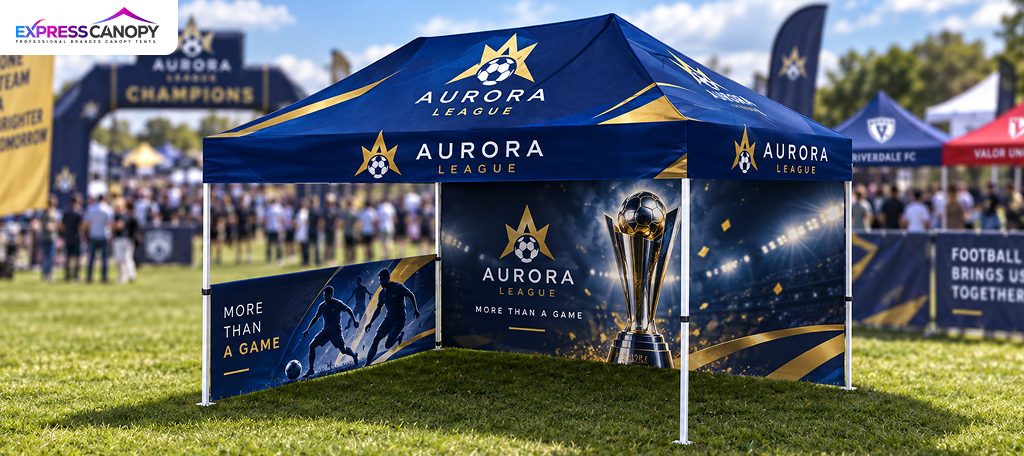
Once fabric is settled, the next question is how the design gets onto it. Dye-sublimation printing infuses ink directly into the fibers. It does not sit on the surface. That means it will not crack, peel, or scratch off during repeated setup and teardown. This is why it has become the standard for any tent meant to last past one event. It also produces sharper, full-color graphics across the canopy top, valance, and back wall. Express Canopy's Custom Canopy Tent Packages show exactly which panels can carry your logo and colors. Their design team can also build a mockup from your existing logo files if you do not have print-ready artwork yet.
Match the Size to Your Booth
Frame and fabric only matter once the footprint is right. A 10x10 stays the most versatile choice. It works for farmers markets, solo vendors, and standard trade show booths. Start there with the 10x10 Custom Canopy Tent.
Need more room for a team or product display? The 10x15 Custom Canopy Collection adds space without a second tent. For larger activations or sponsorships, the 10x20 Custom Canopy Collection fits multiple staff members at once. Buying too big adds unnecessary weight and setup time. Buying too small makes a booth feel cramped next to competitors. Check your usual booth assignment before choosing.
Ready to compare sizes and packages? Express Canopy's full custom tent range includes frame options, wall add-ons, and complimentary design support to help you get the branding right the first time.
Frequently Asked Questions
How long does a heavy-duty custom canopy tent actually last?
Entry-level steel frames typically last 1 to 3 years. Mid-grade aluminum frames with moderate use can last 3 to 5 years or more. Premium aluminum hex frames with proper care often last 5 to 10 years, though the fabric usually wears out before the frame does.
Is steel or aluminum better for a heavy-duty tent frame?
Steel is heavier and cheaper, which suits tents that stay in one location. Aluminum is lighter, rust-resistant, and easier to transport, which makes it the better choice for vendors who travel to different events.
Does storage affect how long a custom tent lasts?
Yes. Folding a wet canopy leads to mold and mildew. Dragging the frame by one leg bends joints over time. Drying the fabric fully before packing and using a proper carry case adds years to a tent's life.
Is a custom branded tent worth the extra cost over a plain one?
Yes, for repeat use. A branded tent works as reusable marketing at every event it attends, while a plain tent offers shelter but no visibility. The higher upfront cost is usually offset by the number of events it gets used at.
Can I use the same tent frame and just replace the printed canopy later?
Yes. Many businesses keep the same aluminum frame for years and only replace the fabric top when their branding changes or the print starts to wear. This is cheaper than buying a whole new tent each time.
Do heavy-duty canopy tents come with a warranty?
Most commercial-grade tents include some warranty coverage, often longer on the frame than on the printed fabric, since fabric wears faster from sun and weather exposure. It's worth confirming warranty terms before buying, especially for frequent outdoor use.
How many people are needed to set up a heavy-duty pop-up tent?
Two people can usually expand and lock a heavy-duty frame in a few minutes. One person can manage it too, but setup takes longer and is harder in windy conditions.