 UPLOAD FILES
Personal Pop Up Tents for Sporting Events: What Features Matter Most?
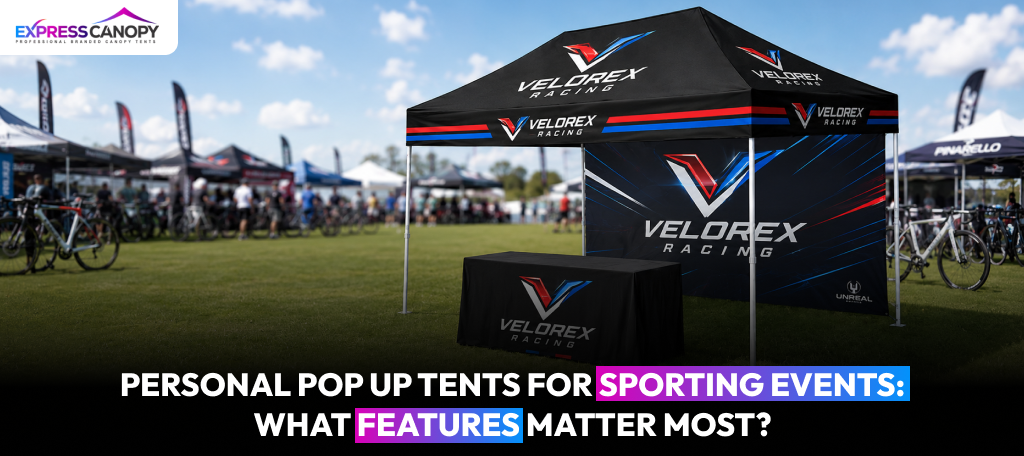
Pop-up makes every sports tent sound the same, but usable space, wall configuration, and how the frame packs down can vary a lot between models, and those differences matter more once a team is unloading gear at a crowded field.
The most useful features in a personal pop-up tent for sports are the right amount of usable space, straightforward setup, manageable transport, flexible sidewall options, and a configuration that suits how the team will actually use it. Branding can also help schools, clubs, and sponsors identify their space at crowded tournaments.
Which Features Matter Most in a Sports Pop-Up Tent?
1. Usable space. This should be the first thing a buyer checks, and it's more than just the tent's nominal size. Athletes, coaches, chairs, coolers, bags, equipment, and sometimes a table all need to fit underneath, so choosing by footprint number alone can leave a setup feeling cramped once everything's unpacked.
2. Setup convenience. Teams often move between fields, tournament locations, practice sites, and seasonal events, so the tent needs to go up and come down without becoming a chore. What matters here isn't just how fast a tent sets up, but how many people it takes, how the frame opens, how walls attach, and how straightforward the packing process is at the end of the day.
3. Portability. Packed size, frame weight, whether a carry case is included, how much vehicle space the tent takes up, and how it will be stored between events all affect how manageable a tent is for a team that moves it often.
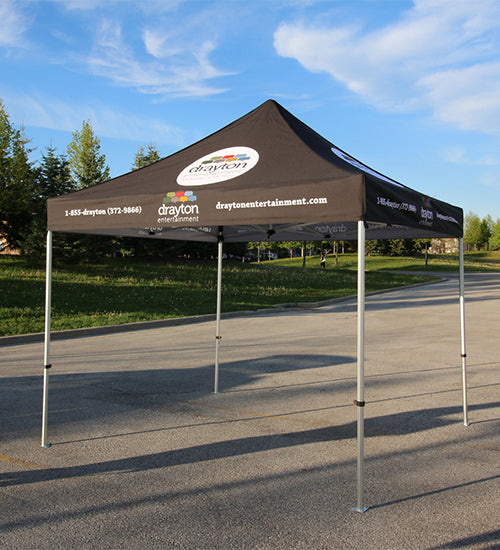
4. Sidewall configuration. No walls at all maximizes access and suits sideline use, where teams are moving in and out constantly. Half walls help define a boundary and can carry sponsor graphics while still keeping the space easy to enter. A full wall adds a backdrop, some privacy, room to separate equipment, and more graphic area, at the cost of open access. Express Canopy sells full and half wall options for its common 10x10, 10x15, and 10x20 canopy configurations.
5. Branding. Branding serves a few different purposes depending on who's buying: team identification, school identity, club colors, sponsor recognition, or tournament organization. It's a genuinely useful feature for groups that show up at the same events repeatedly, but it isn't something every personal or family setup needs.
6. Frame and fabric. Express Canopy's relevant canopy packages use 40 mm and 50 mm frame options depending on the model, 600D polyester with dye-sublimation graphics, and water-resistant, UV-coated fabric on applicable packages. These specifications vary by product line, so it's worth checking the exact model rather than assuming one spec applies across every size.
What Size Pop-Up Tent Works for Different Sports Situations?
|
Sporting Situation |
Possible Size Direction |
What Needs Space |
|---|---|---|
|
Small team/family setup |
10x10 |
Chairs, cooler, bags |
|
Team + trainer station |
10x15 |
Players + treatment table |
|
Tournament/club setup |
10x20 |
Multiple people and equipment |
|
Sponsor/registration area |
10x10–10x20 |
Table + staff + visitors |
These are starting points rather than fixed rules for a personal pop up tent for sporting events, since actual space needs vary by team size and how much gear travels with the group. Express Canopy positions 10x10, 10x15, and 10x20 as different levels of sports-event coverage across its own sporting-event content, and its full canopy tent accessories range covers walls, weights, and anchoring hardware for whichever size fits.
Which Features Matter in Different Sports?
Youth tournament. Portability and a simple gathering space for the team tend to matter more than a large footprint.
Soccer. Open access and a workable seating or shade layout are usually the priority, since players and families move in and out throughout a match.
Baseball. Fitting both equipment and people comfortably becomes the bigger concern, given how much gear a baseball team typically carries.
Track and field. Transport and the ability to set up repeatedly across a long meet day matter more than any single feature.
School sports. Team identification through branding often becomes a priority, especially when several schools are set up side by side.
Multi-day tournament. Organization, a clear storage strategy, and a setup process that stays consistent across several days become more important than they would for a single event.
Sponsored event. Branding and visitor-facing graphics take priority, since the tent is functioning as much as a marketing space as a shelter.
Is Branding Worth It for a Sports Tent?
Branding is worth considering for schools, clubs, tournament organizers, sponsors, athletic departments, and teams that attend the same events year after year, since the same tent gets recognized repeatedly. For a single family attending occasional games, or purely recreational use where the tent is just providing shade, branding adds cost without much practical benefit.
What Should You Check Before Buying?
Who will actually use the tent? What needs to fit underneath it? How many chairs are typically needed? How much equipment travels with the team? What footprint does the venue allow? How often will the tent travel between locations? Who's responsible for setting it up? Do walls make sense for this use case? Is branding worth adding? How will it be stored between events? What anchoring does the venue permit?
Conclusion
Choosing a personal pop-up tent for sporting events comes down to matching usable space, setup, and wall configuration to how the team actually travels and competes. Express Canopy's 10x10 and 10x20 canopy tents, along with tent accessories, cover these configurations for teams weighing their options. For groups needing a heavier-duty, frequently-used setup, Express Canopy's content on commercial pop-up canopies for sporting events covers that use case in more depth.
FAQ
What is the most important feature in a pop-up tent for sports?
Usable space tends to matter most, since it determines whether players, coaches, chairs, and equipment actually fit comfortably underneath the tent.
What size pop-up tent should a sports team use?
A 10x10 suits a small team or family setup, while a 10x15 or 10x20 fits a trainer station, larger equipment loads, or a full club setup.
Is a 10x10 canopy enough for a sports team?
For a small team or family with basic gear, yes. Teams needing a trainer table or carrying more equipment usually need a larger footprint.
Are sidewalls useful at sporting events?
They can be, particularly for defining a boundary or adding sponsor graphics, but open sides often work better where players need to move in and out frequently.
Should a team tent have custom branding?
It's worth it for schools, clubs, and sponsors attending recurring events, but less necessary for a family using the tent occasionally for shade.
What should I consider when transporting a sports canopy?
Packed size, frame weight, whether a carry case is included, and how much vehicle space the tent takes up all affect how manageable it is between locations.
Is a 10x20 tent useful for tournaments?
Yes, particularly for club or multi-station setups needing room for several people and equipment, though smaller teams may not need that much space.