 UPLOAD FILES
Outdoor Advertising Trends Every Business Should Know
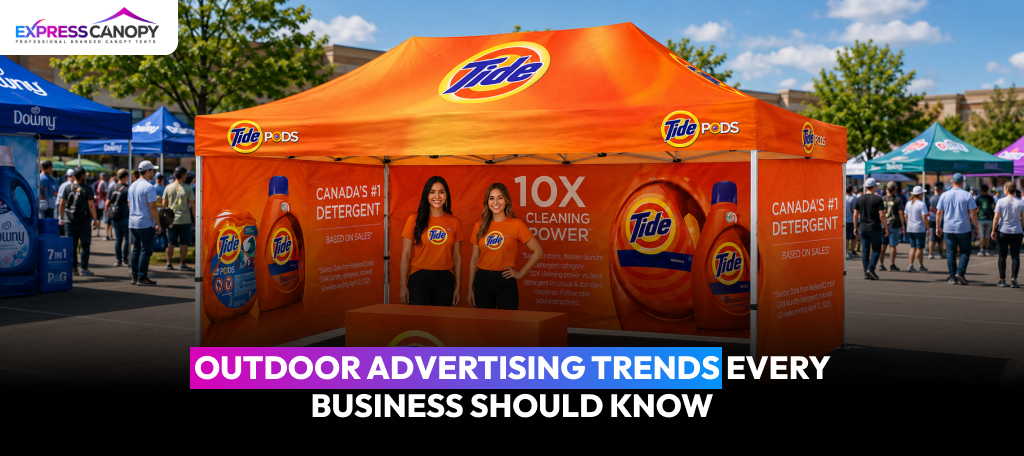
Outdoor advertising in 2026 is becoming more strategic. Instead of repeating the same logo across every display, businesses are building event setups that guide people from first glance to final action.
The most effective outdoor advertising trends now combine long-distance visibility, useful brand experiences, relevant messaging, reusable graphics, and measurable results. When canopies, flags, signs, inflatables, and counters work together, they create a clear customer journey that helps people notice the brand, understand the offer, and take the next step.
The seven trends below show how to improve visibility, create a more engaging event experience, and guide visitors from their first glance to a meaningful action.
1. Design the Campaign for Three Viewing Zones
Most event setups underperform because every display repeats the same message. Instead, assign one job to each viewing distance.
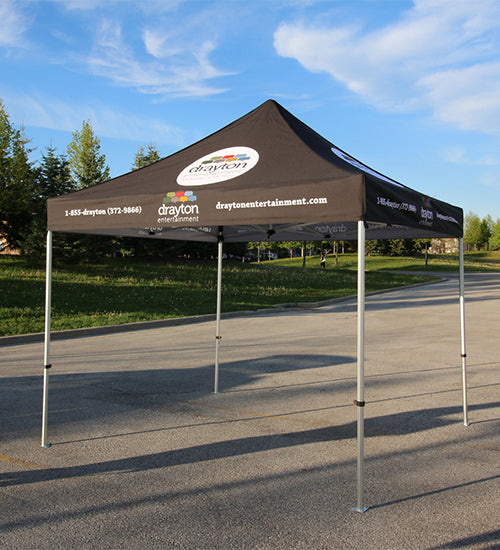
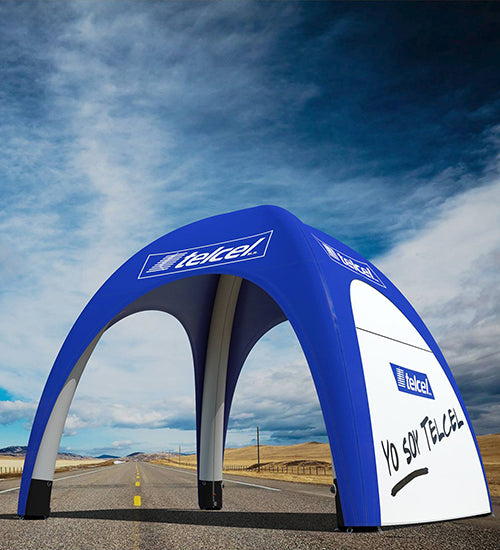
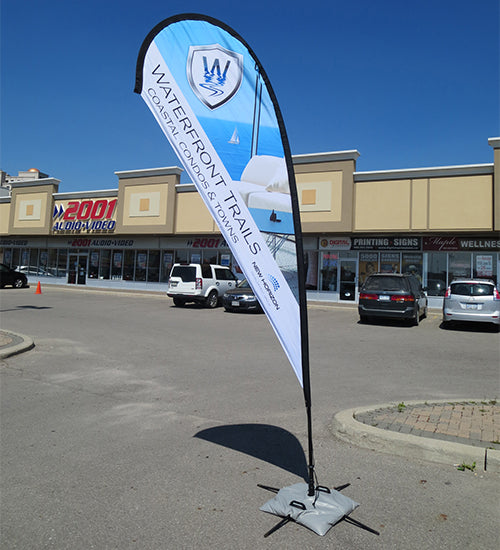
At 50 feet or more, use custom feather flags or inflatable arches to help visitors locate the activation. At 15-30 feet, custom canopy tents should identify the business and its main offer. At 3-8 feet, an A-frame sign should communicate one action, price, or benefit.
Once visitors can find and understand the display, the next step is giving them a clear and worthwhile action to take.
2. Replace Generic QR Codes With Micro-Conversions
A QR code works only when visitors know what will happen after scanning it. Vendors use separate codes for separate goals: a menu near the queue, a coupon at the sampling counter, and a lead form beside the consultation area. Give each code a unique UTM tag so the marketing team can identify which placement generated scans.
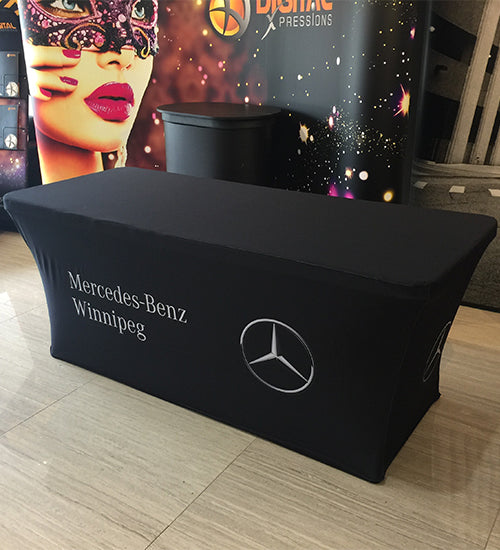
Do not place QR codes on distant flags. Position them on custom table covers, counters, or signs where visitors can stop and scan safely.
3. Use Weather-Switch Messaging
One underused outdoor advertising idea for businesses is creating a small library of weather- and time-specific graphics. Current OOH campaigns increasingly use weather, time, location, and product availability to adjust messages.
McDonald’s “Crave & Claim” campaign, for example, connected changes in temperature with app-based offers.
A local café can use the same principle without a digital billboard. It could display “Cold Brew Samples” during hot afternoon hours, then replace the message with “Warm Up With Coffee” when the temperature falls. Reusable outdoor pop-up banners make these changes practical.
Relevant messaging can attract attention, but a useful on-site experience gives people a stronger reason to stay and interact.
4. Build a Service-Led Activation
The newest outdoor marketing strategies give people a useful reason to enter rather than relying on another giveaway. At Coachella 2026, notable brand activations emphasized hospitality, personalization, and practical attendee experiences instead of visibility alone.
A sports sponsor could provide a shaded hydration and phone-charging point. A home-services company could offer a five-minute repair clinic. A skincare brand could create a sun-protection station inside an inflatable tent.
The service attracts a relevant audience and creates a natural opening for conversation. It also gives visitors a clearer reason to remember the business.
5. Turn One Sidewall Into a Content-Capture Zone
A canopy wall does not need to repeat the company logo. Design one panel as a clean photo background containing a campaign hashtag, product outline, or event-specific message. Place it where visitors can take photos without blocking the sales area.
This gives branded outdoor displays a second life on social media. Keep the logo visible but secondary because people are more likely to share an experience than an obvious advertisement. Use removable canopy tent accessories to change printed walls for different locations, sponsors, or seasonal campaigns.
To convert that added attention into results, the booth must separate brand recognition from the messages that drive action.
6. Separate Recognition From Conversion
Recognition graphics identify the business. Conversion graphics tell visitors what to do next. Combining both on every panel usually results in small text, competing messages, and weak visual hierarchy.
Use the canopy roof, flag, and banner stands for brand recognition. Reserve the counter, A-frame, or front-facing wall for a price, demonstration schedule, booking prompt, or limited offer.
For example, a fitness studio could use a tall flag reading “Free Mobility Check,” a canopy carrying the studio name, and a counter sign offering a two-minute assessment. Once every display has a clear role, the final step is learning from visitor behavior and improving the setup after each event.
7. Plan for Fast Setup and Easy Transport
A display that is difficult to move or assemble can create delays before the event even begins. Choose promotional displays for businesses based on transport space, team size, setup time, and venue access.
Use lightweight signs and pop-up displays for quick promotions, while larger canopies and inflatables are better for planned activations with additional staff. Store graphics separately, label every component, and complete a practice setup before the event.
A practical display system helps the team arrive prepared, reduce setup problems, and focus more time on customers.
Comparison of Popular Outdoor Advertising Methods
|
Advertising Method |
Primary role |
Limitation |
Choose it when |
|---|---|---|---|
|
Custom canopy |
Creates a staffed campaign hub |
Requires transport and anchoring |
You need shelter, branding, and customer interaction |
|
Feather flags |
Attracts attention from a distance |
Cannot carry detailed copy |
Visitors need help finding the booth |
|
A-frame signs |
Communicates nearby offers or directions |
Limited long-distance visibility |
Customers are already walking near the activation |
|
Inflatable arch |
Creates an entrance or landmark |
Requires more setup and storage |
You need strong event-scale visibility |
|
Table cover |
Brands a sales or registration counter |
Easily blocked by crowds |
You operate a check-in, sampling, or service table |
|
Pop-up banner |
Delivers changeable campaign messages |
Needs suitable placement |
Offers vary by event, season, or audience |
The strongest event advertising solutions usually combine one display for attraction, one for identification, and one for conversion.
Build an Outdoor Display Around the Customer Journey
Choose each display based on what visitors need to see and do.
-
Use your branding elements to attract attention, a canopy to create the interaction area, and nearby signs for pricing, directions, QR codes, or offers.
-
Keep the layout simple so customers can enter, understand the message, and speak with staff without confusion.
-
Small events may need only a canopy, table cover, and one sign, while larger activations may require additional directional or branded elements.
Choose the Right Canopy Footprint for Your Event
Start with what will happen under the tent. Choose a 10x10 custom canopy for compact sales, registration, or sampling setups. Move to a 10x15 custom canopy when demonstrations and customer conversations need separate space. Select a 10x20 custom canopy for larger teams, multiple counters, queues, or walk-through activations.
The best outdoor advertising methods often work together. A flag attracts attention, a canopy establishes the main area, a table cover improves the customer-facing workspace, and a QR-enabled sign converts interest into a measurable action. You can use sidewalls for privacy or storage, visible signs for offers, and suitable canopy tent accessories for anchoring and transport.
Express Canopy lets you build around your event needs instead of forcing every campaign into the same package. Choose the footprint first, then add only the elements that improve visibility, workflow, and customer access.
FAQs
How many outdoor advertising displays does one booth actually need?
Most small booths need three functions covered: one display for long-distance visibility, one structure that identifies the business, and one close-range sign that explains the offer. Adding more displays only helps when each one has a separate purpose.
Which message should appear on the canopy, flags, and signs?
Use flags and roof graphics for the company name or product category because they are viewed from farther away. Reserve A-frame signs, table graphics, and front-facing panels for prices, benefits, QR codes, schedules, or specific calls to action.
How can businesses prevent visitors from blocking important graphics?
Keep essential wording in the upper section of the back wall, roof, or valance where tables and people will not cover it. Lower panels should contain supporting images or details that customers can read after entering the booth.
What happens if the mobile internet is weak at the event?
Keep the landing page lightweight and avoid large videos, unnecessary scripts, or complicated forms. It is also useful to provide a short URL or text-message option so visitors have another way to access the offer.
What should businesses check before using sidewalls or large banners outdoors?
Check the forecast, venue rules, surface type, anchoring requirements, and safe operating conditions. Sidewalls and large graphics increase the area exposed to wind, so every display must be secured correctly and removed when conditions become unsafe.
How can a small business make an event booth look professional on a limited budget?
Start with a clean branded canopy, a fitted table cover, and one readable sign. Consistent colors, adequate spacing, visible pricing, and an uncluttered entrance usually add more value than filling the booth with mismatched promotional items.
How should outdoor advertising performance be measured?
Track qualified conversations, leads, QR scans, offer redemptions, demonstrations, and event-attributed sales. Compare those results with the total event cost and use the findings to adjust the layout, message, or offer before the next campaign.