 UPLOAD FILES
Heavy-Duty vs Standard Canopy Tents: Which Fits Your Needs
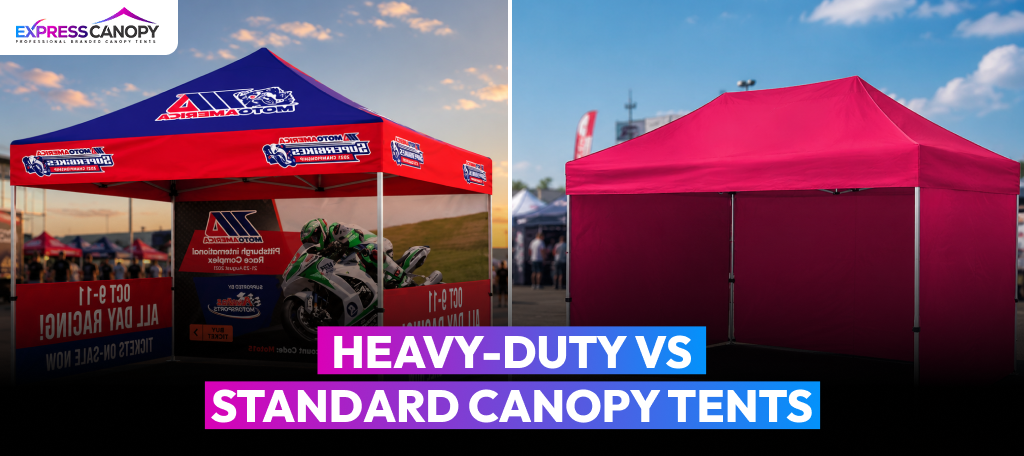
Your canopy may perform perfectly at a few local events, but frequent travel can expose its limits. Repeated setup, heavier walls, counters, signage, and changing outdoor conditions place more pressure on the frame than occasional use.
That is where the choice between a standard canopy and a heavy duty canopy tent becomes important. One offers easier handling and a lower upfront cost; the other provides stronger support for a demanding event schedule.
This guide compares heavy-duty vs standard canopy tents to help you choose the right frame based on usage, portability, accessories, and long-term value.
Which Canopy Fits Your Event Schedule?
The right frame depends largely on how often you use it. A business attending two controlled events a year does not place the same strain on a canopy as a team setting up every weekend. Frequent loading, assembly, transport, and storage gradually wear down the legs, joints, locks, and roof supports.
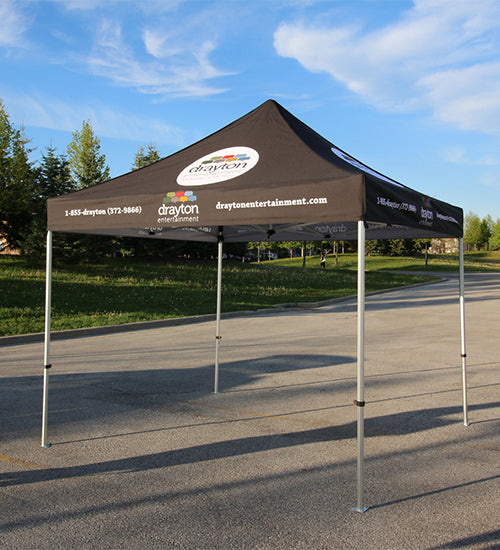
A standard canopy is a practical choice for community events, school functions, indoor exhibitions, and occasional promotions. Businesses starting with a simple setup may consider a 10×10 custom canopy starter package, which includes a printed canopy top with a choice of 40 mm or 50 mm frames.
A commercial canopy tent is better suited to frequent travel, multiple printed walls, and busy setups where the canopy serves as the main space for staff, products, and customers.
Compare the Job, Not Just the Price
|
Buying Question |
Standard Canopy |
Heavy-Duty Canopy |
|
Usage |
A few events per year |
Frequent or touring schedule |
|
Typical setup |
Printed top and table |
Walls, counters, signs, or displays |
|
Main benefit |
Lower cost and easier transport |
Better durability for repeated use |
|
Main drawback |
May wear sooner |
High cost weight and initial |
|
Best use |
Local fairs and occasional promotions |
Festivals, trade shows, and activations |
What Does the Extra Strength Do for You?
Before comparing the benefits, it helps to understand where frame strength comes from. Thicker legs, reinforced truss bars, stronger joints, larger feet, and durable locking parts work together to create a more stable structure.
A 40 mm commercial canopy frame offers a practical balance of strength and portability. It is easier to transport and works well for trade shows, local markets, community events, and businesses that attend promotions regularly.
A 50 mm heavy-duty canopy frame uses thicker components for demanding event schedules, larger canopy sizes, and setups with walls, counters, displays, or signage.
The extra strength creates a dependable base for a complete branded booth. It can also help frequent event teams avoid loose joints, worn connections, and frames that become difficult to open after repeated use.
The trade-off is added weight. A heavier frame requires more cargo space and may be harder for one person to handle, so your choice should balance durability with transportation, storage, and setup needs.
Picture the Booth on Its Busiest Day
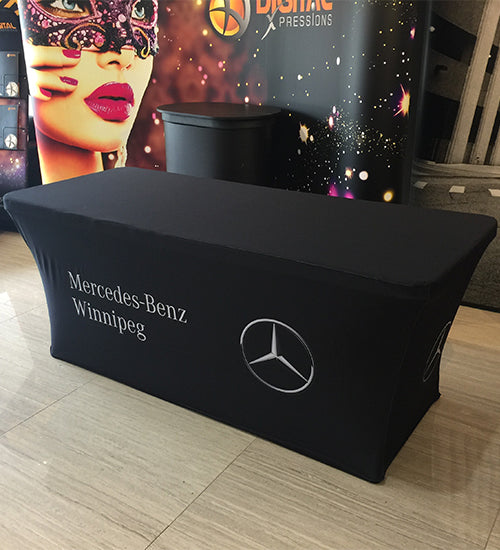
Imagine a bakery attending three outdoor markets during the y. It needs shade, visible branding, and a clean sales area but carries everything in a small vehicle. A custom table cover may offer the right mix of presentation, cost, and portability.
Now picture a beverage company running samples at ten summer festivals. Its canopy supports printed walls, inventory, a service counter, and staff working for several hours. A heavy duty pop up canopy protects the wider activation from the wear caused by frequent setup and travel.
The Hidden Cost of Choosing Too Light
A lower price loses its appeal if the frame needs early replacement. A damaged tent can interrupt setup, delay staff, leave graphics unusable, and weaken a campaign that already includes event fees and travel costs.
For a regular exhibitor, the best canopy tent for business is often the one with the lowest cost per use. A stronger frame may cost more initially but deliver better value across a long event schedule.
When Heavy-Duty Is More Than You Need
Not every buyer needs the strongest frame. A startup testing one market, a school hosting an annual fundraiser, or a company attending a controlled indoor event may gain little from added weight and capacity.
A standard canopy can leave more budget for graphics, signage, products, or accessories.The goal is not to buy the largest specification; it is to create a booth your team can use comfortably and repeatedly.
Run This Five-Point Buying Test
Before ordering, review:
-
Frequency: Monthly, seasonal, or once a year?
-
Load: Will you add walls, counters, lights, or signage?
-
Travel: Will it fit your vehicle and storage area?
-
Staffing: Who will carry and install it?
-
Growth: Will the display expand later?
Frequent use, multiple accessories, and long-distance travel usually point toward a professional canopy tent. Occasional events with a basic layout generally favor a standard model.
Plan the Booth Around the Visitor
Frame selection is only part of a successful setup. Decide where visitors will first see the brand, how they will enter, where staff will stand, and what action they should take.
For demonstrations, keep the front open and use the back wall as the main visual. For registration, position the counter near the entrance and storage behind staff. An 8ft trade show display can carry the same campaign into indoor venues where a canopy is not suitable.
Choose for the Workload You Actually Have
Choose a standard canopy when affordability, easy handling, and occasional use matter most. Select a heavy duty canopy for events when your schedule involves repeated travel, accessory-heavy setups, or a high cost of equipment failure.
The smartest purchase is the tent your team can transport, assemble, and reuse without unnecessary difficulty. Compare the frame specifications, picture your busiest event, and invest in the strength that keeps your booth working, not simply the strongest label.
Frequently Asked Questions
1. How Much Weight Should Be Added to Each Canopy Leg?
Requirements differ by venue, surface, weather, and tent design. Follow the organizer’s rules and the manufacturer’s anchoring instructions.
2. Can a Vendor Canopy Stay Up Overnight?
Only when the organizer permits it and conditions remain safe. Remove valuables, secure the setup, and never leave it standing through severe weather.
3. Do Sidewalls Make a Booth Feel Too Closed?
They can. A back wall and one partial side often provide shelter and branding without making the entrance feel blocked.
4. Is Vendor Insurance Required for a Canopy Booth?
Some organizers require liability insurance. Confirm the coverage amount, certificate wording, and submission deadline before the event.
5. Can a Bent Canopy Truss Be Repaired?
A damaged structural part should normally be replaced with a compatible component. Improvised repairs may make the frame unsafe.
6. How Can Rainwater Pooling Be Prevented?
Open the frame fully and tension the roof correctly. Never stand beneath pooled water or push it upward from inside.
7. Which Artwork Files Produce the Best Printing?
Vector AI, EPS, or print-ready PDF files usually produce the sharpest logos and text. High-resolution images may also work.
8. Can a Custom Canopy Be Used Indoors?
Sometimes, but venue rules vary. Confirm ceiling clearance, anchoring restrictions, and required fire documentation first.