 UPLOAD FILES
Event Branding Ideas for Corporate Events, Activations & Brand Experiences
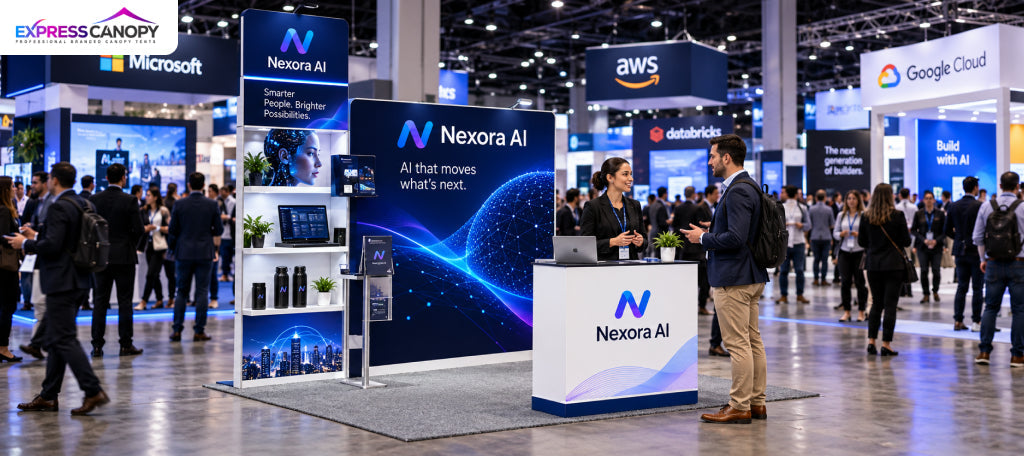
Picture two brands exhibiting at the same event.
One has its logo on every available surface, expensive displays, and a beautifully decorated space. The other has a clear message, an eye-catching setup, and an experience people genuinely want to try.
Which one will attendees remember?
The answer isn't necessarily the brand with the bigger budget. It's the one that gives people something worth noticing, experiencing, and talking about.
That's what great event branding does.
What Is Event Branding, and Why Does It Matter?
Event branding is how you bring your brand's identity, personality, and message into a physical environment through visuals, displays, and experiences.
Think of it in two parts:
-
Branding the space: Canopies, backdrops, signage, counters, and graphics that make your business recognizable.
-
Branding the experience: Demonstrations, interactive activities, sampling stations, and conversations that let attendees discover what your brand offers.
Start With the Experience You Want People to Remember
Before choosing colors, printing graphics, or ordering event displays, answer one question:
What should attendees remember about your brand after they leave?
Your answer should shape every major design decision.
|
Your Goal |
Create This Experience |
Give Attendees This Next Step |
|
Brand awareness |
Recognizable branded environment |
Explore the brand |
|
Product launch |
Hands-on product discovery |
Request a demo |
|
Lead generation |
Personalized consultation |
Book a meeting |
|
Customer engagement |
Interactive product activity |
Explore relevant products |
|
Corporate networking |
Comfortable branded meeting area |
Continue the conversation |
Corporate Event Branding Ideas That Feel Professional, Not Predictable
The most effective corporate event branding ideas create a professional environment while making it easier for guests to connect with the business.
1. Turn the Entrance Into a Brand Introduction
Your entrance is the first opportunity to communicate what the event is about.
Instead of welcoming attendees with only a company logo, combine your brand identity with a message that explains the experience ahead.
For a technology conference, that could be:
"Explore What's Next in Smarter Business Operations."
Support the message with clear directions to registration, presentations, and demonstrations to help guests with understanding of where they are and what they can expect, the moment they enter.
2. Give Every Event Area Its Own Purpose
Instead of decorating each area identically, use consistent branding while giving every space a distinct function.
For example:
-
Registration: Clear identification and efficient check-in.
-
Presentation area: Main campaign message and speaker backdrop.
-
Networking area: Subtle branding and comfortable conversation spaces.
-
Product area: Demonstrations, benefits, and technical information.
This keeps the experience coordinated without making every display compete for attention.
3. Make Branded Structures Part of the Experience
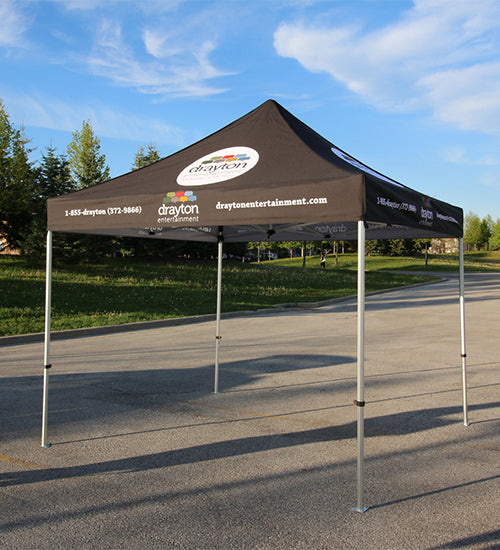
For outdoor corporate gatherings, custom canopy tents can establish recognizable activity areas while providing shelter where appropriate.
Coordinate canopy graphics, tent walls, and table presentations so guests recognize each station as part of the same brand.
Brand Activation Event Ideas People Actually Want to Try
A display tells people what a product does.
An activation lets them discover why it matters.
The strongest brand activation event ideas turn product benefits into activities visitors can understand and participate in.
4. Let Attendees Experience the Product Promise
If your product claims to solve a problem, build an experience that demonstrates the solution.
A portable speaker brand could create a listening station where visitors compare sound settings.
A skincare brand could offer guided product trials based on individual skin concerns.
A packaging company could let attendees compare materials, finishes, and structural options.
The key is to focus each demonstration on one meaningful benefit rather than presenting every feature at once.
5. Create Interactive Challenges With a Purpose
Games can attract attention, but the activity should connect to what your business offers.
For example, a sustainable packaging brand could challenge visitors to match products with suitable packaging materials.
Participants learn something useful, while staff discover which product applications interest them.
A fitness equipment brand could offer a short technique assessment instead of an unrelated prize-wheel game.
6. Design Photo Moments Worth Sharing
A branded photo opportunity works best when the experience itself is distinctive.
Instead of placing a logo on a generic backdrop, build the scene around a recognizable product, campaign concept, or brand characteristic.
For a travel company, this might be a destination-inspired installation. For a cosmetics launch, it could be a coordinated product-color environment.
Position branding where it remains visible in photographs without overwhelming the scene.
7. Turn Sampling Into Product Discovery
Don't simply hand out samples and hope visitors remember the brand.
Create a guided comparison.
A beverage company could organize a tasting station by flavor profile. A fragrance brand could invite attendees to explore scent families before selecting a favorite.
Display product names and differences clearly, then provide a natural next step such as finding a retailer or exploring the collection.
Design the Event Around the Attendee Journey
An engaging activation can still underperform when visitors don't know where to enter, what to explore, or what to do afterward.
Plan the environment around this sequence:
Notice → Approach → Understand → Engage → Experience → Remember → Act
Each stage should influence the physical layout.
Use prominent graphics to attract attention from the approach. Keep the entrance accessible. Position demonstrations where visitors can observe without blocking traffic.
Place product information near the activity it explains, and reserve a separate area for longer conversations or lead capture.
Luxury Brand Event Ideas That Feel Exclusive Without Looking Overdone
Luxury branding isn't about adding more decorations. It's about making deliberate choices and executing them consistently.
These luxury brand event ideas prioritize product presentation, visual restraint, and personalized attention.
8. Let One Statement Piece Lead
Choose a hero product, striking campaign image, or carefully designed installation as the focal point.
Give it enough surrounding space to remain visually dominant.
For a premium watch launch, individual product displays with controlled lighting may communicate more than a crowded wall of graphics.
Keep supporting information nearby without competing with the product itself.
9. Make Personalization Part of the Experience
A premium experience should feel considered rather than complicated.
Offer guided product exploration, scheduled consultations, or tailored demonstrations when appropriate.
For example, a luxury accessories brand could organize a private material-selection station where visitors compare finishes and customization options.
10. Coordinate the Smallest Details
Your registration graphics, product labels, consultation counters, and takeaway materials should feel like parts of one design.
Use consistent typography, carefully selected colors, and high-quality graphics.
Avoid mixing unrelated display styles or filling every available surface with promotional messages.
Outdoor Event Branding Ideas That Stand Out in Busy Spaces
Outdoor events introduce another challenge: your branding must compete with movement, surrounding vendors, changing light, and unpredictable conditions.
The solution is to combine visibility with a practical, organized setup.
11. Make Your Canopy a Recognizable Landmark
At festivals and outdoor activations, overhead branding helps visitors locate your business from surrounding walkways.
A 10x10 custom canopy tent can support a compact sampling or information station, while a 10x20 custom canopy provides additional room for activities when the event permits.
Use visible roof areas for your brand name and reserve lower graphics for campaign details.
12. Use Tent Walls to Create Branded Zones
Custom tent walls can create backdrops, define activity boundaries, or separate operational space from customer-facing areas.
A printed backwall can carry the campaign message behind a demonstration.
Consider access, airflow, weather conditions, and venue restrictions when choosing wall configurations.
13. Bring Branding Down to Customer Level
Overhead branding attracts attention, but customers also interact with tables, counters, and product displays.
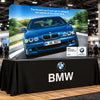
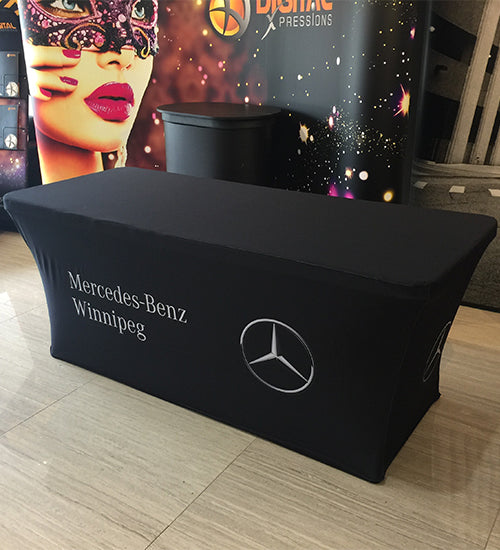
Use coordinated custom table covers at registration, sampling, and consultation stations.
Keep the table graphics simple, particularly when products or people may obscure the front.
14. Use Flags to Help Visitors Find You
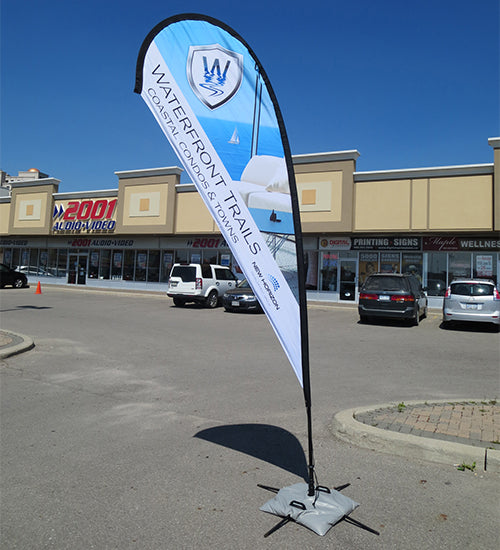
Vertical flags can help identify an activation from approach directions where the main structure isn't immediately visible.
Position them near permitted entrances or important activity areas rather than scattering them randomly.
Keep directional messages distinct from promotional graphics so visitors can find the right station quickly.
Create a Branded Environment, Not a Collection of Displays
Before purchasing individual displays, plan how the elements will work together.
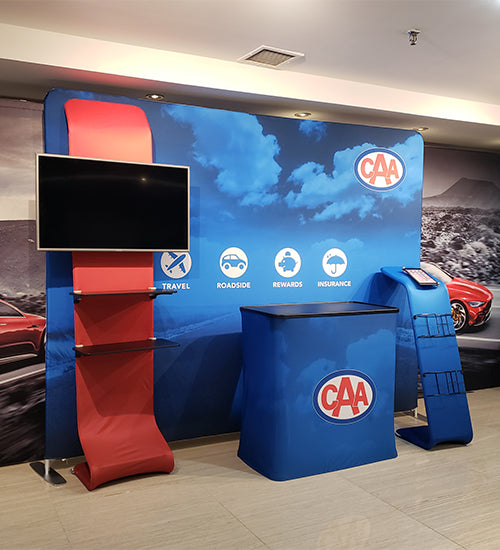
A corporate outdoor event might combine a branded canopy, printed backwall, registration table, and directional signage.
A product activation might use the same structure differently, with a demonstration station at the front, product displays along one side, and a consultation point toward the rear.
Common Event Branding Mistakes to Avoid
Branding every surface: Prioritize the entrance, main message, and key interaction areas instead of repeating logos without purpose.
Choosing displays before planning activities: Map the required space for demonstrations, visitors, staff, and queues before selecting equipment.
Creating entertainment unrelated to the product: Connect activities to a meaningful benefit, use case, or customer need.
Ignoring visitor movement: Keep entrances, pathways, and conversation areas accessible.
Forgetting the next step: Make it clear where attendees can purchase, request information, or book a meeting.
Overlooking event logistics: Confirm installation rules, anchoring, electrical access, storage, and transportation requirements before finalizing the setup.
Frequently Asked Questions
What are the most effective event branding ideas for corporate events?
Prioritize coordinated entrance graphics, stage backdrops, branded registration areas, clear directional signage, and dedicated networking spaces. Each element should support the event's purpose while maintaining a consistent visual identity.
How can I make a brand activation more engaging?
Give attendees a hands-on activity that demonstrates a product benefit. Product comparisons, guided trials, customization stations, and relevant challenges create opportunities for meaningful interaction.
How can outdoor event branding attract attention?
Use visible canopy graphics, coordinated tent walls, strategically positioned flags, and clearly identified activity stations. Test visibility from surrounding walkways and ensure displays don't obstruct visitor access.
What makes a luxury brand event feel premium?
A focused visual concept, carefully presented products, consistent graphics, and personalized interactions. Give important displays sufficient space and avoid competing promotional messages.
How do I choose the right branded displays for my event?
Start with your objective, available footprint, visitor activities, and environmental conditions. Then select the canopy, walls, counters, tables, and signage needed to support those requirements.