 UPLOAD FILES
Commercial Pop Up Canopy for Sporting Events: Everything You Need to Know
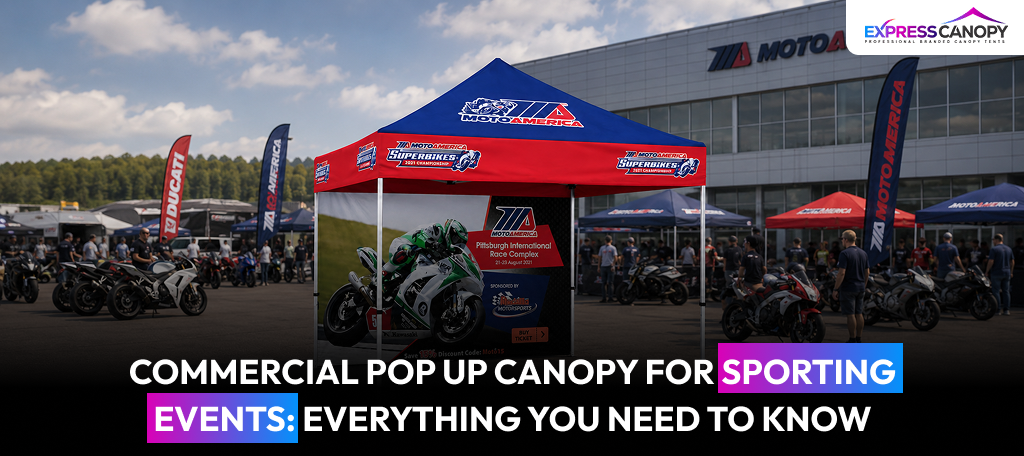
Picture a youth soccer tournament in July. Teams sit in direct sun for six hours. Parents crowd under one small shelter. The vendor tents flap and lean in the wind. Now picture the team next to them with a sturdy, branded canopy: shaded players, organized gear, a cooler in the corner, and a logo visible from three fields away.
That is exactly what a commercial pop up canopy for sporting events delivers. In this guide, we will walk you through why teams need one, what separates commercial-grade from store-bought, which size and features to choose, and how to get the most out of your investment.
Let's start with the "why."
Why Sports Teams and Event Organizers Need a Commercial Canopy
At a sporting event, a canopy does three jobs at once.
First, it protects people. Athletes need shade between games to recover and avoid heat stress. In fact, heat illness is one of the leading preventable risks in youth sports, and shaded rest areas are now part of most leagues' heat-safety guidelines. A 10x10 sports canopy shades a full bench of players plus their gear, and marathon organizers use the same canopies for aid stations and medical tents along the course.
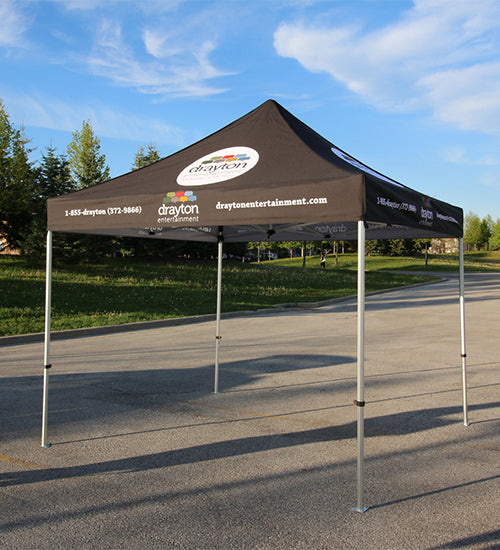
Second, it builds your brand. A printed custom canopy tent turns your sideline into a billboard where sponsors love seeing their names on the valance. It’s where parents can spot your team instantly in a complex filled with forty identical white tents.
And third, it works all day, every weekend. Tournaments run 8 to 12 hours, often through sun, wind, and sudden rain. A club team may set up 20 or more times in a single season. That schedule brings us to the most important question of all: why a commercial canopy instead of a cheaper store-bought one?
Commercial vs. Standard Pop Up Tents: The Real Difference
The difference between these comes down to two parts: the frame and the fabric.
A standard consumer tent uses a thin steel frame with plastic joints. Plastic brackets crack under stress, thin legs bend in wind, and the fabric fades after one summer. Ask any tournament director: the broken tents in the dumpster on Sunday night are almost always consumer models. Most fail within a single season of weekly use.
A commercial canopy tent, on the other hand, uses a heavy-duty aluminum frame typically 40mm or 50mm hexagonal legs with metal connectors. Anodized aluminum does not rust, resists bending, and weighs less than steel, which you will appreciate on the walk from the parking lot. Express Canopy frames, for example, use this construction and come backed by a warranty, something consumer tents rarely offer at all.
But the frame is only half the story. Commercial canopies use 600D polyester material that is not just water-resistant but UV-coated, and fire retardant. That last part matters more than most buyers realize. Many venues require fire-retardant certification (such as CPAI-84) before you can even set up, especially at indoor facilities and large sanctioned events.
Consumer tents rarely meet this standard. So while a commercial canopy costs more upfront, the math works in your favor: one commercial canopy typically outlasts three consumer tents, which means it actually costs less per event over time.
Convinced of commercial-grade? Good. The next question is size.
What Size Should You Choose?
The answer depends entirely on how you will use it:
-
10x10: The standard for one team's sideline, a check-in table, or a vendor booth. A 10x10 custom canopy is also the easiest size for two people to carry and set up in under ten minutes.
-
10x15: A 10 x15 canopy set up, with room for a full roster plus a treatment or hydration table. Athletic trainers at track meets and cross-country invitationals often prefer this size.
-
10x20: The big one is ideal for tournament headquarters, registration areas, or club setups covering multiple teams. A 10x20 custom canopy tent can shade twenty or more people at once.
Once you have settled on a size, the next step is knowing which features separate a great event canopy from an average one.
Features Important at Sporting Events
Keep this checklist handy when comparing models of any event canopy tent:
-
Aluminum frame (40mm or 50mm legs). Lighter than steel, rust-proof, and far stronger at the joints.
-
Adjustable height legs. Raise the canopy for airflow on hot days, or drop it lower when the wind picks up.
-
Fire-retardant, UV-coated 600D fabric. Protects your players and satisfies venue requirements.
-
Sidewalls. A back wall blocks wind and gives your team privacy for halftime talks, while half walls keep sightlines open so coaches can still watch the field.
-
Weight bags for every leg. Plan on roughly 40 lbs per leg and remember, most turf fields ban stakes completely, so weight bags are essential equipment, not an accessory.
-
A wheeled carry bag. Because parking is never next to the field.
Pro Tip: One more money-saving tip here: full canopy packages that bundle the tent, printed walls, and accessories usually cost less than buying the same pieces separately.
Of course, a strong canopy is only half the goal. The other half is making it unmistakably yours.
Branding Your Sports Canopy
This is where dye-sublimation printing earns its keep.The process bonds your team colors, logo, and sponsor names directly into the fabric, so graphics stay bright season after season instead of peeling like surface prints. Print the roof peaks and all four valance sides so your name reads from every direction, spectators approach a field from everywhere. Reputable suppliers, including Express Canopy, provide free design proofs before printing, so you see exactly how the finished canopy will look before it goes into production.
Quick Buying Advice
Before you click "buy," keep these final points in mind. Buy the frame quality first and the print second, a great logo on a frame that folds in week three helps no one. Choose 50mm legs if you set up weekly; 40mm is fine for occasional use. Order two to three weeks before your first tournament to leave time for proofs and shipping. And budget for weight bags on day one, because wind damage to unweighted canopies is the most common and most preventable, failure at sporting events.
Frequently Asked Questions
What size commercial pop up canopy is best for sporting events?
A 10x10 fits one team's sideline or a vendor booth. Choose 10x15 for a team plus a trainer's table, and 10x20 for registration areas or multi-team club setups.
Can a commercial pop up canopy withstand wind and rain during outdoor sports events?
Yes, commercial frames with 40mm-50mm aluminum legs and water-resistant 600D fabric handle normal wind and rain when every leg is weighted (about 40 lbs per leg). No pop up canopy is storm-rated, so take it down in severe weather.
What's the difference between a commercial canopy tent and a standard pop up tent?
Commercial models use thick anodized aluminum frames with metal connectors and fire-retardant, UV-coated fabric. Standard tents use thin steel and plastic joints that crack under weekly use. One commercial canopy typically outlasts three consumer tents.
Can I customize a commercial sports canopy with my team or sponsor's branding?
Yes, dye-sublimation printing puts full-color logos, team colors, and sponsor names on the roof, valance, and walls, and the ink is bonded into the fabric so it will not peel or fade quickly.
Which features should I look for when buying a commercial pop up canopy for sporting events?
Look for a 40mm or 50mm aluminum frame, adjustable legs, fire-retardant 600D fabric, sidewall options, weight bags for turf fields, a wheeled carry bag, and a real warranty.
How do I maintain a commercial pop up canopy to extend its lifespan?
Dry it fully before storage, never force the frame open or closed, weigh all four legs at every setup, wipe grit off the sliders, and check the bolts monthly during the season. These habits can double a canopy's working life.